

On this page (2 sections)
A system-first playbook for designing inbound and outbound motions that reinforce each other. The Inbound–Outbound Compounding Playbook breaks down how DevCommX aligns inbound signals, outbound execution, and follow-up logic into a single compounding GTM system.
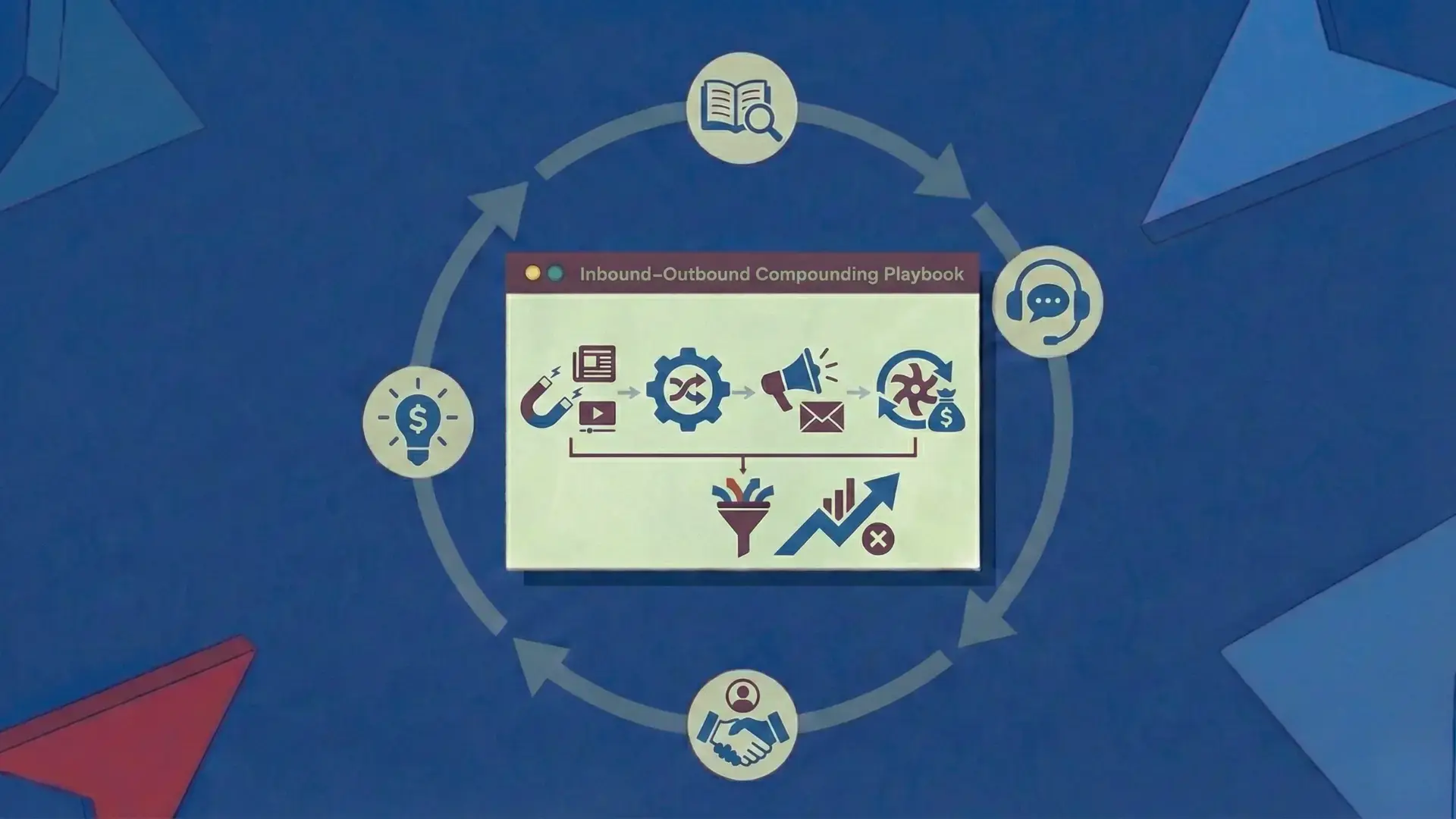
This playbook explains how to engineer inbound and outbound to work together.
Inside the playbook, you’ll learn how to:
- Capture inbound signals that power outbound timing
- Use outbound activity to strengthen inbound conversion
- Align messaging and sequencing across both motions
- Route leads dynamically based on engagement and intent
- Eliminate duplication and conflicting GTM efforts
- Measure compounded impact across the funnel
All frameworks are production-tested and reflect how DevCommX runs compounding GTM systems.
Why This Playbook Matters
Most GTM teams treat inbound and outbound as rivals.
- Inbound leads ignored by outbound teams
- Outbound insights not fed back into inbound
- Duplicate outreach and poor timing
- Missed opportunities due to siloed execution
- One GTM system, multiple entry points
- Shared signals and feedback loops
- Coordinated execution across motions
- Pipeline growth that compounds over time
This playbook helps teams move from parallel motions to compounding GTM systems.
Who this playbook is for
- Aligning GTM motions
- Signal-driven systems
- Funnel efficiency
- Founders scaling pipeline
If inbound and outbound feel disconnected, this playbook shows how to make them reinforce each other.
Book a free 30-minute GTM audit. You leave with a prioritised plan either way.